
Agroecological Farming
Opportunity to support a world-first study improving child health and climate outcomes.
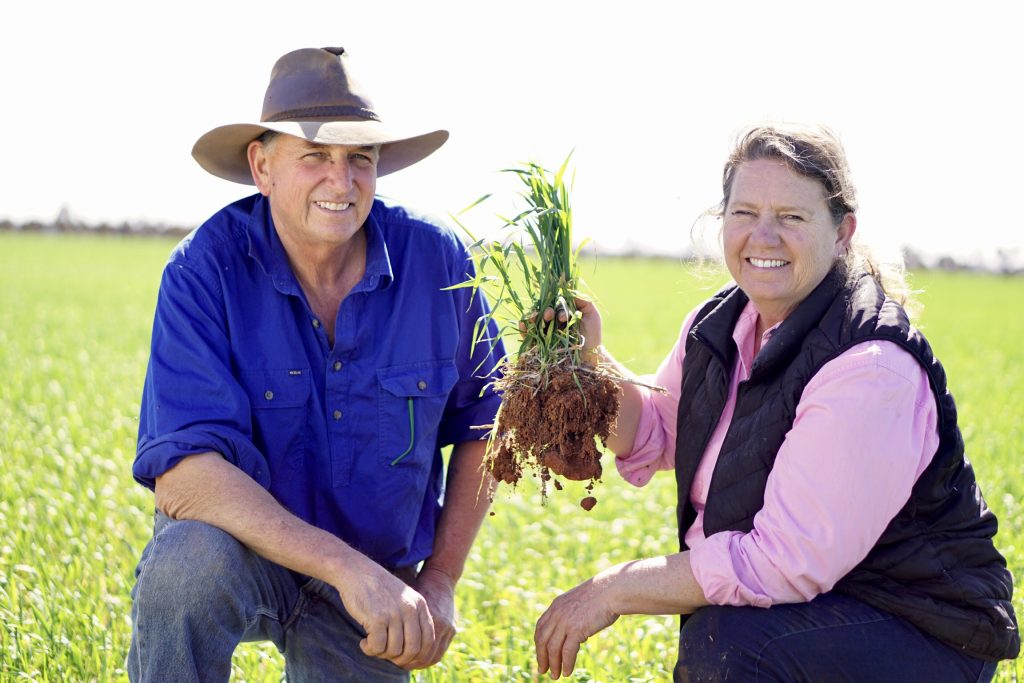
ORIGINS and ECU, in partnership with Natural Intelligence Farming, are proposing a six-week family food exchange to evaluate the impact of agroecologically farmed food on children's health and wellbeing.
Emerging research suggests agroecological farming practices may improve soil health and influence the nutrition composition of food, but there is very limited evidence examining human health outcomes.
Our six-week food exchange will seek to address this gap by assessing whether the dietary swap influences children's inflammation, gut microbiome, behaviour, and symptoms linked to asthma, allergies, and eczema.
Why we need this research:
- Modelling projects that climate change will continue to reduce the profitability of Australian farms over the coming decades
- 45% of Australian children live with a chronic disease, like asthma, an allergy, poor mental health, or obesity
- Australian farms with greater natural capital experience up to 3% higher stock productivity
| CURRENT FARMING PRACTICE vs AGROECOLOGICAL FARMING PRACTICE | |
|
|
References:
- Hughes, N., Lu, M., Soh, W.Y. & Lawson, K. (2021). Simulating the effects of climate change on the profitability of Australian farms. ABARES.
- Australian Institute of Health and Welfare (AIHW). Health of children, updated 26 June 2026.
- Heagney, E. et al. (2025). Natural capital enhances farm production, profitability and financial resilience: findings from a study on 230,000 ha of farmland in Australia.